Motivation for Self-pubbers in a Saturated World
If you’re an indie author, working in an utterly saturated self-pub market, even before AI drenched it exponentially further—you may be wondering, what keeps someone writing?

First, even though the current market makes it feel like screaming into a void, it would be cynical to accept that a self-pub book will never find its audience. Still, there’s a pragmatic side to understand, it’s not an impossibility you will never have the audience you feel your story deserves. So, sure, let’s ask the hard question: If my book NEVER finds an audience, why write it at all?
Well, subtracting the audience, what motivates you?
I’ve asked myself this question. I’ve come up with a few things I think are actually pretty objective and might help give others some perspective to keep going. At the very least, these reasons may help give me some structure to understand my own motivations.
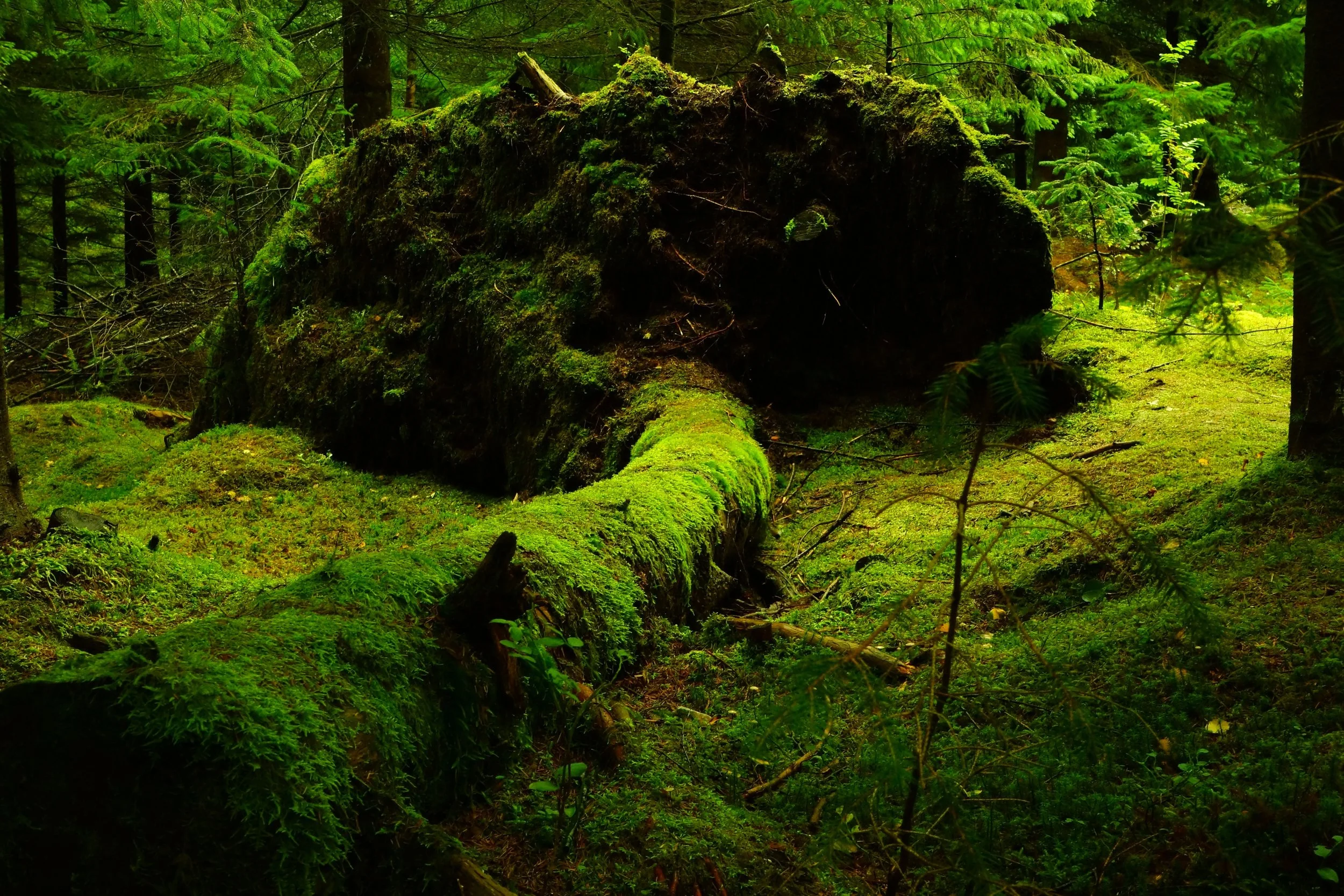
Here’s the more ethereal answer (they get more solid from here): If a tree falls in the forest, and no one is around to hear it—it still actually falls. You matter, even if no one knows you exist. So do your books. We all exist, that’s a fact. We all take up space. We all, in large and small ways, interact. All of your pursuits, large or small have a ripple in this world. The world is not still. It has you and millions of others to thank for that. You exist, your books exist, it all matters. It just objectively does.

On the topic of trees, because your books exist, a century or 2 after you die, some member in your distant family, putting together a family tree, will find them. If that were me, I’d think that relative was pretty cool. I’d even possibly see if I could get my hands on some copies, and in reading them, get into their head—literally hundreds of years later.
On that note, your books give you longevity. When you die, they will live on. Your words, your thoughts, your creative pursuits will still create a world, all their own, for people to walk around in and explore, just like you do when you read a book by another author from 50 or 100 or 1,000 years ago. As long as physical copies of your books exist, as long as the platforms you published them on carry forward in some form, you will, in some way, carry on.
Next: It keeps you in the game. Keeping track of, cultivating, nourishing a creative act? That’s all engagement. It’s the kind of fruitful engagement that keeps you going. It gives you an agency, much like planning, planting and raising a garden. The simple act itself has genuine reward and value. No audience required. If you’ve ever participated in or watched a marathon, there are thousands of people running and almost none of them are doing it for someone else to purchase or even witness the act. They’re doing it because it gives them agency. That’s real. That’s important. That’s motivation. This is a very odd, Yogi Berra thing to say but when you’re doing a thing? You’re doing a thing. If you weren’t, what are we even talking about?

On that note, it gives you something to talk about. You don’t have to share the writing to share the experience. If you write, that gives you a reason to go to a writing group, attend classes, go to conventions. You can meet other people who are interested in your same pursuits—simply by having one. No one needs to read your books for that. It just happens through being involved in the craft.
Related to that, lastly, the act of writing keeps you connected to the world. And not just that, with your world, with the people who have motivated you in the past and present and in an abstract but very real way, in the future. As I write, I hear their voices. One of my biggest sources of strength in this pursuit passed away in January. Her voice is still somewhere in the back of my mind when I write. Some of the things I write about are still things I knew she would like. It’s all in there, a teacher that got you into it, they’re there too. Even your past selves, they all come out when you’re looking for character ideas. It’s an ebb and flow of ideas and people and cultural experiences, richly organized in creative ways. That’s something to experience, isn’t it? As a writer? Isn’t that worth something? I think it is.

It’s magic. You’re training little flocks of words, casting them across the sky—in order to conjure massive, fantastic worlds.
Ok … ok … lastly-lastly: To me, writing a book is the best way to experience a book. No other act plunges you deeper into the story and characters and events than being the actual author. I write the stories I write because I want to experience them. Think of all the history and lore never included in a story but feels like it’s there … that all gets to be in the author’s head. It’s about as conscious as it gets—perhaps even more so than real life. As an author, you can literally turn your head around 360 degrees. You can see through stone and flesh. You can read people’s minds. Even if you only ever become moderately good at it—I believe it’s the most interactive, immersive experience you’ll ever have.
It isn’t just its own reward. It is by far, its own reward.